
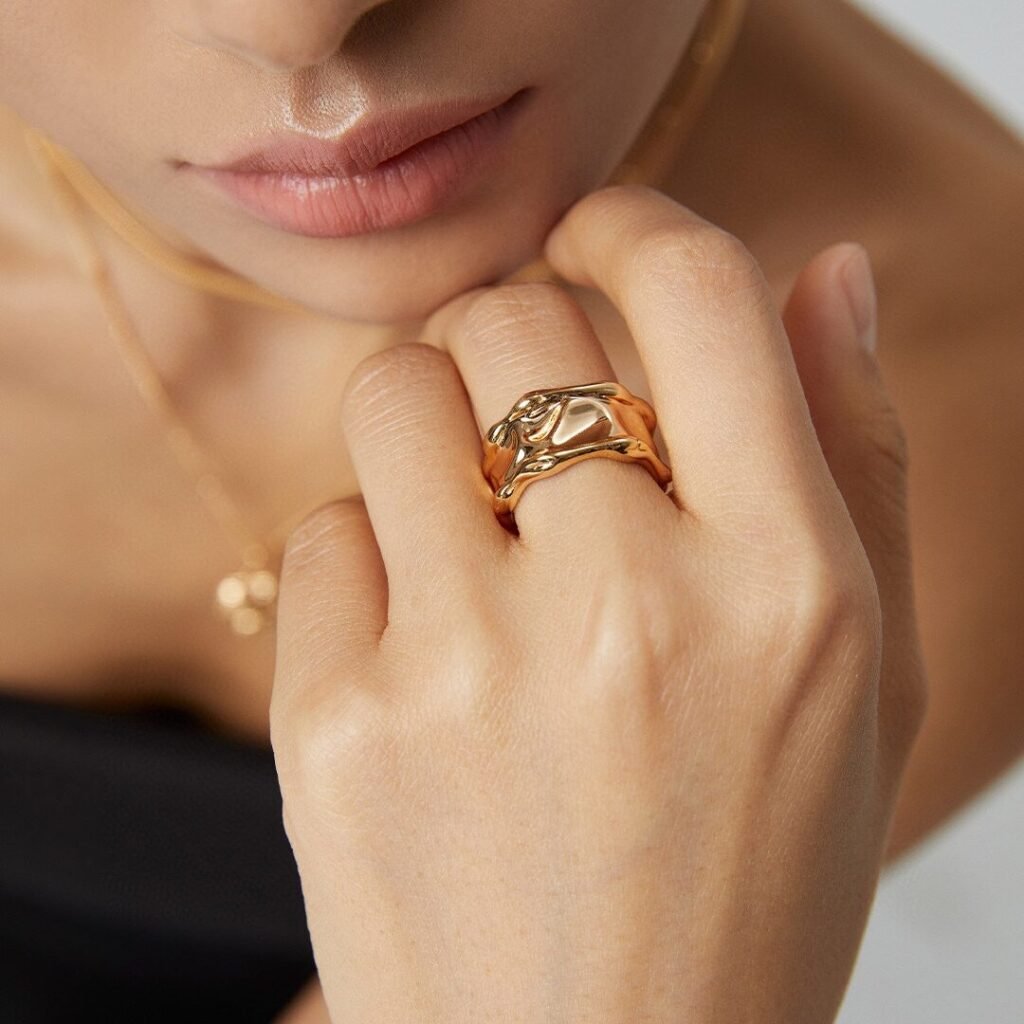
Gold plated jewellery gives you the look of solid gold without the price tag, and if you take care of it properly, a good piece can stay bright for years. Skip a few basic habits and gold plated jewellery wears thin within months, no matter how well it was made. This guide covers exactly how to care for gold plated jewellery, from the moment you take it out of the box to the point it eventually needs replating.
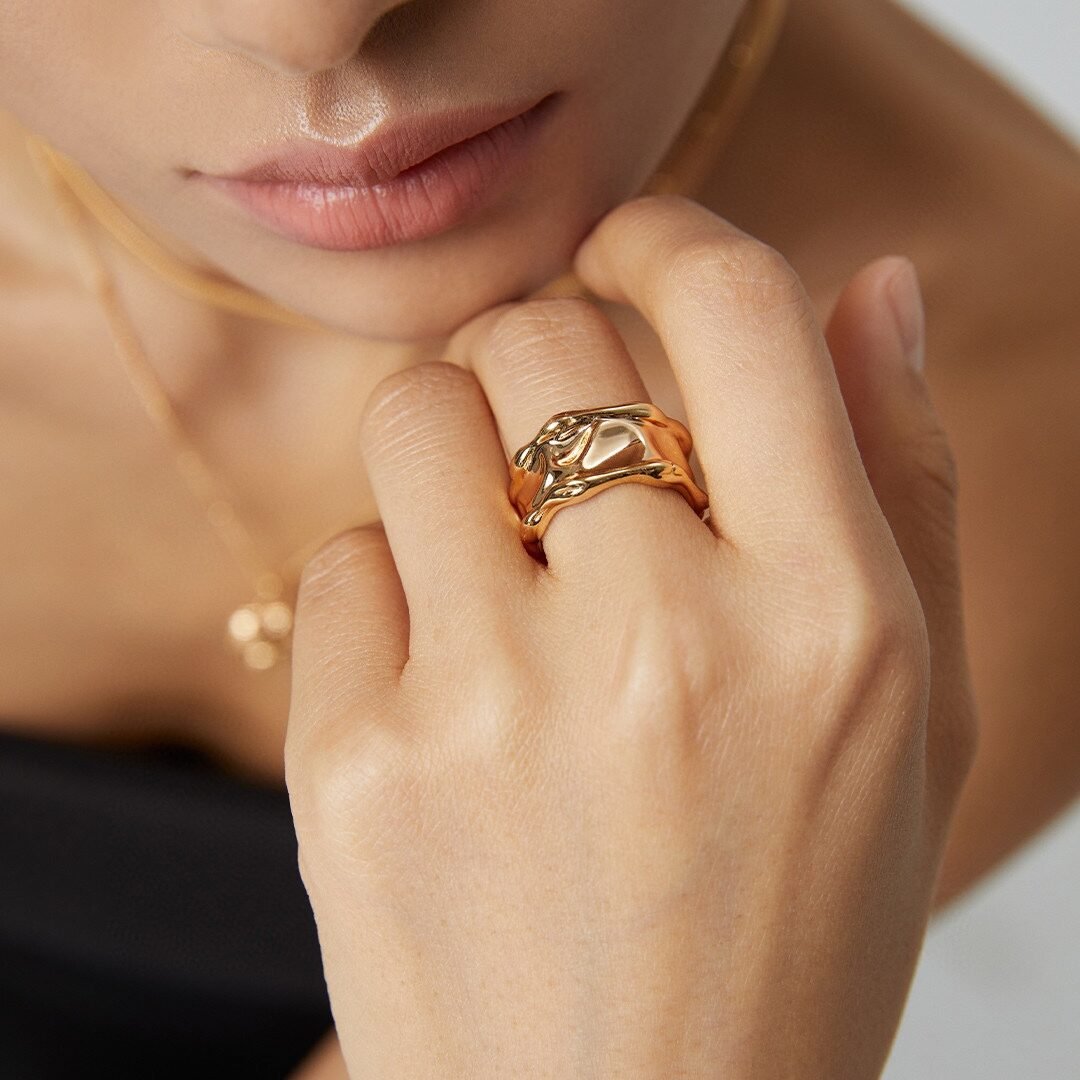
What gold plated jewellery actually is, and why it needs different care to solid gold
So what is gold plated jewellery, exactly? It’s a base metal — usually brass, copper, or stainless steel — coated in a thin layer of real gold through a process called electroplating (or PVD plating for a more durable finish). That gold layer sits at a few microns thick, so even “premium” plated pieces are still only a fraction of a millimetre of actual gold.
Solid gold doesn’t tarnish because it’s gold all the way through. A plated piece can wear through to the base metal underneath, especially at points that rub against skin or fabric — the inside of a ring, the back of an earring post, the clasp of a chain.
This is different again from gold vermeil (a thicker gold layer over sterling silver, not base metal) and gold filled (a much thicker, mechanically bonded layer). If you’re not sure which one you own, it’s worth checking, because the thinner the plating, the gentler your gold plated jewellery needs to be treated.
Does gold plated jewellery tarnish?
Yes, gold plated jewellery can tarnish, though “tarnish” isn’t quite the right word for what’s happening. The gold layer itself doesn’t react with air the way silver does. What you’re usually seeing when a piece tarnishes is either the base metal underneath showing through once the plating has worn thin, or a build-up of oils, lotion, and everyday grime dulling the surface. Either way, it’s fixable or preventable, not a sign the piece is faulty.
The dos: how to keep gold plated jewellery looking new
Take it off before water, sweat, and chemicals
Water itself won’t destroy a plated piece, but what’s in the water usually will. Chlorine from pools, salt from the sea, and the chemicals in tap water can all speed up wear. So can sweat, which is slightly acidic. The simplest rule: your jewellery goes on last, after you’ve showered, done your makeup, and applied perfume, lotion, or sunscreen — and it comes off first, before you swim, shower, or exercise.
Store it away from air and other jewellery
Gold plated jewellery reacts with air over time, which is what causes that dull, slightly green or brown tarnish. Storing pieces in an airtight pouch or box, ideally with a silica gel packet to absorb moisture, slows this down considerably. Keep pieces separate from each other too — plated jewellery scratches easily, and metal-on-metal contact in a drawer is one of the fastest ways to wear through the gold layer.
How to clean gold plated jewellery — gently, not often
When a piece needs cleaning, a soft, dry microfibre cloth is usually enough to bring the shine back. If you need to clean gold plated jewellery more thoroughly, warm water with a drop of mild soap and a soft cloth — never a brush — will do it. Dry the piece immediately and thoroughly afterwards.
The don’ts: what strips gold plated jewellery fastest
- Ultrasonic and steam jewellery cleaners — designed for solid gold and gemstones, they’re too aggressive for a thin plated layer
- Chlorine-based cleaning products, pool water, and salt water
- Perfume, hairspray, and lotion applied directly onto the piece — put it on after these instead
- Abrasive cloths, toothpaste, or baking soda — common “hacks” online that will scratch the surface
- Sleeping, showering, or exercising while wearing it
What speeds up tarnishing on gold plated jewellery (and how to slow it down)
A few everyday factors make a plated piece wear faster than the care steps above alone can prevent:
- Humidity and heat — moisture in the air speeds up the reaction that dulls the base metal underneath, so warm, humid climates and coastal areas see gold plated jewellery tarnish faster than dry, cooler ones.
- How often a piece is worn — daily wear against skin, especially on rings and earrings, wears through plating faster than occasional wear.
- Skin chemistry — some people’s skin is naturally more acidic, which reacts with the metal faster.
- Contact with other jewellery — pieces left tangled together in a drawer scratch and rub against each other constantly.
How long does gold plated jewellery last with good care?
This is the question every buyer actually wants answered, and it depends on three things: how thick the plating is, how often the piece is worn, and how well it’s cared for.
Signs it’s time to replate or retire a piece
Watch for these signs that your gold plated jewellery needs attention:
- The gold colour looks patchy rather than evenly faded
- You can see a different colour (usually silver or copper) showing through at high-contact points
- The piece feels rougher or thinner where it used to be smooth
- Cleaning no longer restores the shine, even briefly
FAQs
Can gold plated jewellery get wet? Brief contact with clean water is generally fine, but chlorine, salt water, and prolonged exposure will wear it faster. Take your jewellery off before swimming or showering as a habit.
Can you shower with gold plated jewellery? It’s best not to. Shampoo, soap, and hot water all speed up wear, and it’s an easy habit to build once you get used to taking pieces off first.
Does gold plated jewellery turn your skin green? It can, particularly once the plating has worn thin enough to expose the base metal underneath, or if you have naturally acidic skin. It’s not harmful, and it’s a sign the piece could use a clean or is due for replating.
Is gold plated jewellery worth buying if it doesn’t last forever? For the price, yes. It gives you the gold look without the gold cost, as long as expectations are set correctly from the start. Treated well, most people get years of wear before a piece needs attention.